
Local Guide • 6 min read
There is a moment on mountain roads in Crete when you look ahead and think:
“Are we really supposed to drive up there?”
Usually, yes.
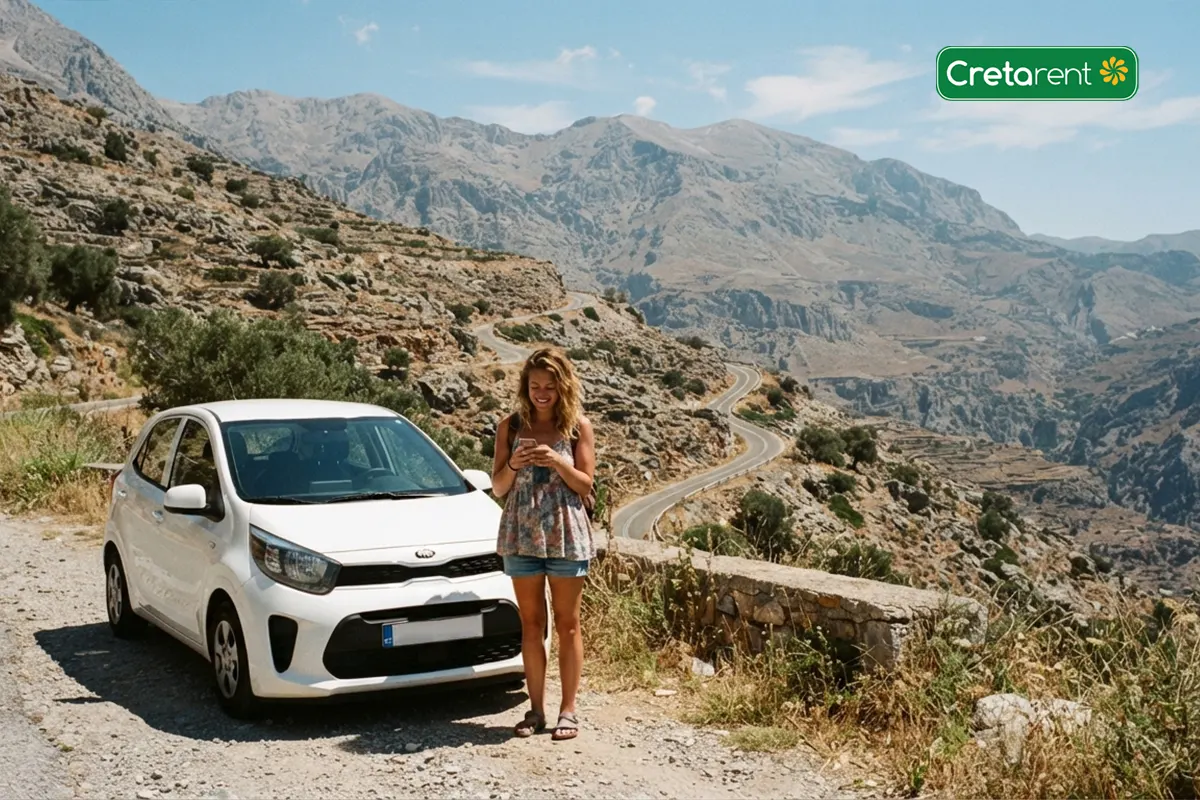
Crete’s mountains are one of the best parts of exploring the island by car, but the roads can look quite different from the wide coastal routes most visitors are used to. Some are smooth and surprisingly easy. Others are narrow, winding and definitely not somewhere you want to be in a hurry.
The good news is that you don’t need a special car or years of mountain-driving experience. You simply need to know what you’re getting into.
Why Are Crete’s Mountain Roads Different?
Much of Crete’s interior is mountainous, and many villages are built on slopes rather than flat land. That means roads often have to follow the landscape instead of travelling in a straight line.
You may find:
- Tight bends
- Steep sections
- Narrow lanes
- Stone walls close to the road
- Limited shoulders
- Occasional rough patches
- Very little traffic in some areas
It can feel quite different from driving along the coast. It is also where some of the most memorable drives on the island happen.
Not Every Mountain Road Is Difficult
This is worth pointing out because photos of Cretan mountain roads can make them look more dramatic than they actually are. Roads connecting larger villages are often perfectly manageable. You may simply need to drive more slowly than you would on the main highway. The smaller roads are where things become more interesting.
A road that looks perfectly normal on the map can become a narrow single-lane stretch once you get closer to a village or mountain viewpoint. That’s when patience becomes more useful than confidence.
What Happens When Two Cars Meet?
This is probably one of the first things people wonder about. On a narrow road, two cars may not always be able to pass comfortably. The solution is usually quite simple: slow down and find the wider section.
Sometimes one vehicle will reverse a short distance. Sometimes there will be a small pull-in area just ahead. Don’t try to squeeze through a gap simply because you think you should be able to.
The driver who knows the road will often have a better idea of where it is easiest to stop. And if you’re in a rental car, there’s absolutely no reason to prove anything.
Take the Bends Seriously
Mountain roads can have limited visibility around corners. Don’t cut across the centre of the road just because the road appears empty. Slow down before the bend, stay in your lane and expect another vehicle to appear.
This is especially important on roads where rocks, walls or vegetation block your view. You don’t need to crawl along. You just need enough speed to react if something appears around the corner.
The Views Are Part of the Journey
One of the reasons people enjoy driving through the mountains is that the scenery changes constantly. You can leave the coast surrounded by resorts and hotels, then gradually find yourself among olive groves, vineyards, rocky slopes and small villages. There are also plenty of moments when you’ll want to stop.
Do it.
Just make sure you pull completely off the road and leave enough space for other vehicles to pass. A five-minute stop for a mountain view can easily become one of the best parts of the day.
Don’t Trust the Map’s Timing Too Much
This is particularly important when planning a day around mountain villages. A map might tell you that two destinations are only 25 kilometres apart. That doesn’t mean the drive will take 25 minutes.
A winding mountain road can make a relatively short distance take considerably longer. If you’re planning lunch at a particular time, meeting someone or catching a ferry later in the day, give yourself plenty of room.
Crete rewards slow travel. It doesn’t always reward tight schedules.
What About Roads to Remote Villages?
If you’re heading towards a small village you’ve never heard of, check the route before leaving. Don’t assume every road marked on your navigation app is equally comfortable.
Sometimes the main route takes a few minutes longer but is much easier to drive. If you’re unsure, ask a local. A hotel receptionist, taverna owner or someone at a petrol station will often know which road makes the most sense.
That’s one of those situations where local advice can be better than blindly following the fastest route on your phone.
What Should You Do at Night?
Mountain roads are much less enjoyable when you don’t know them and can’t see what’s ahead. If you’re planning a trip into the mountains, try to leave yourself enough time to return before it gets dark.
This doesn’t mean you need to avoid mountain villages in the evening. It simply means that driving an unfamiliar winding road for the first time at night is something we’d avoid if possible. Especially after dinner.
Is a Rental Car Suitable for Mountain Roads in Crete?
For most normal trips around Crete, a standard rental car is enough. You don’t automatically need a 4×4 just because you’re leaving the coast.
For ordinary roads to villages, viewpoints, archaeological sites and popular countryside destinations, a regular car is generally the practical choice. The important thing is choosing a car you’re comfortable driving.
If you’re travelling with a family and luggage, don’t choose the smallest car simply because it looks cheaper if everyone will be uncomfortable for a week. And if you already know you’ll be exploring more remote areas, mention your plans when arranging your rental.
A Few Things We’d Remember
Slow down before corners.
Not after you’ve already entered them.
Don’t follow the car in front too closely.
It may know the road better than you do.
Use pull-ins when necessary.
There is no shame in letting another vehicle pass.
Don’t stop in the middle of the road for photos.
Find somewhere safe first.
Keep some water in the car.
Especially during summer.
Download your route if you’re heading somewhere remote.
Mobile coverage isn’t guaranteed everywhere.
And Then There Are the Sheep
You can plan your route perfectly. You can check the weather. You can leave early. And then a group of sheep can decide that your carefully planned mountain drive needs a ten-minute break.
Welcome to Crete.
Slow down, let them pass and enjoy the interruption. You were probably going to stop for a photo anyway.
The Best Part of Driving in the Mountains
The mountain roads aren’t simply something you have to tolerate to reach a destination. They’re part of the experience. You pass through villages you hadn’t planned to visit, discover viewpoints that aren’t marked on your original route and occasionally find yourself stopping beside the road simply because the landscape looks completely different from anything you’ve seen near the coast.
That’s one of the reasons we like having a car in Crete. You aren’t restricted to the easiest places to reach. You can go a little further. And sometimes, the road itself becomes the destination.
Continue Exploring Crete
You may also enjoy: