
Local Guide • 7 min read
Driving in Crete for the first time can feel a little different from driving at home.
The main roads are generally straightforward, but then a perfectly normal-looking route can suddenly turn into a narrow village road, a mountain bend or a stretch where you need to slow down and take your time.
That’s part of exploring Crete.
You don’t need to be an expert mountain driver. You just need to know what to expect, give yourself enough time and avoid treating every road like you’re late for something.
Here are a few things we’d want to know before driving in Crete for the first time.
First: Don’t Let the Roads Put You Off
Crete is a large island, and some of the places worth visiting are much easier to reach by car than by public transport.
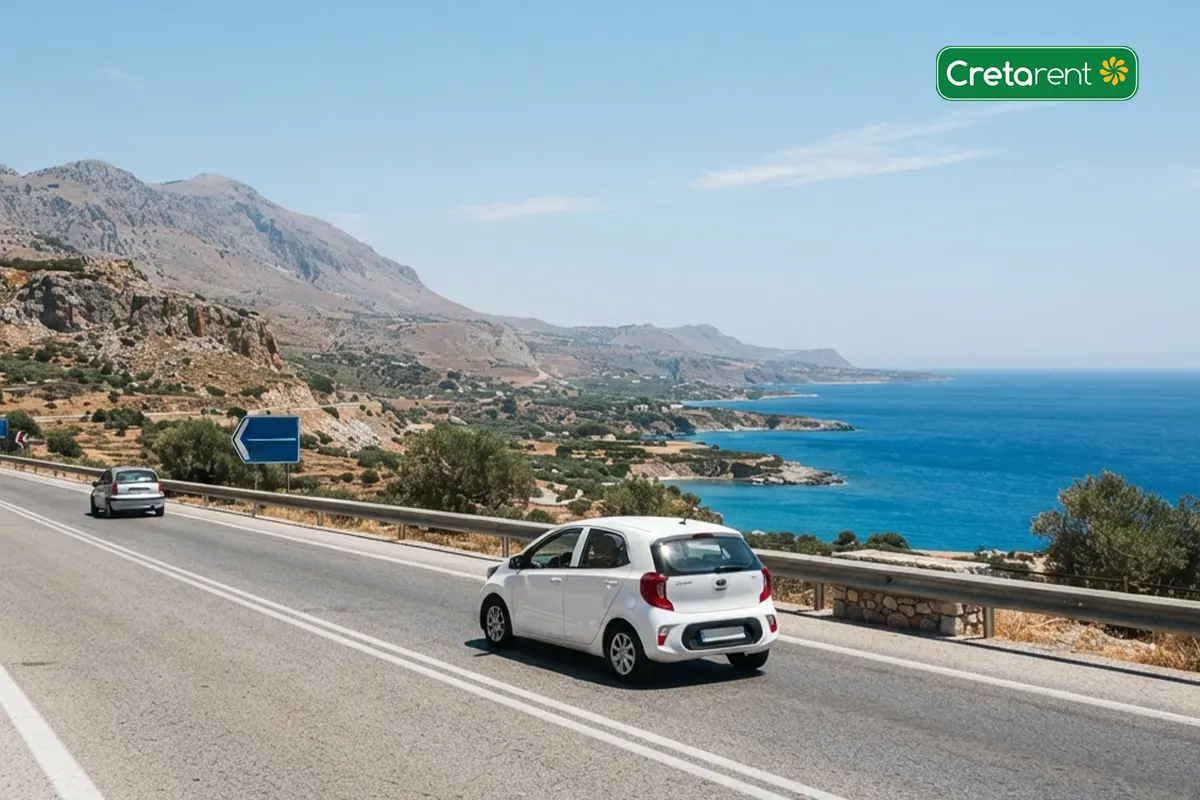
The main north coast highway connects the larger towns and resorts, while smaller roads take you into villages, mountains and quieter parts of the island. The main road can also change quite noticeably along its route, so don’t assume that every section will feel like a modern motorway.
Once you get away from the main roads, things slow down. That’s not necessarily a bad thing. A mountain village may only be 20 kilometres away, but the drive can take longer than you’d expect. Give yourself time and enjoy it.
The Main Roads Are Usually the Easy Part
If you’re arriving at Heraklion or Chania Airport and heading towards one of the main coastal towns, your first part of the journey will usually be fairly straightforward. The main north coast route is useful for getting between places such as Chania, Rethymno and Heraklion.
The situation changes once you turn towards smaller villages or mountain destinations.
You may encounter:
- narrower roads
- sharp bends
- steep sections
- limited shoulders
- slower vehicles
- occasional animals or pedestrians
None of this means you shouldn’t go. It simply means you shouldn’t plan a mountain drive using the same expectations you would have for a motorway journey.
Don’t Judge a Journey by Kilometres
This is probably one of the most useful things to understand before driving in Crete.
A destination might appear only 30 kilometres away on Google Maps, but that doesn’t mean you’ll get there in 25 minutes. Mountain and village roads are slower. Stopping to let another vehicle pass on a narrow section is slower. And sometimes you’ll simply want to stop because the view is too good to ignore.
When planning your day, look at the driving time, not just the distance.
What About Other Drivers?
You’ll probably notice that some local drivers are much more confident on the roads than you are. Don’t feel pressured to drive faster than you’re comfortable with. If another driver wants to get past, let them do so safely and continue at your own pace.
You are on holiday.
There is absolutely no prize for arriving at the beach seven minutes earlier.
Take Extra Care on Mountain Roads
Some of the most beautiful places in Crete are reached by smaller roads. That’s also where you’ll need to concentrate more. Slow down before bends rather than halfway through them. Watch for vehicles coming in the opposite direction and don’t assume that you can see what’s around the next corner.
If the road becomes very narrow, take your time. You may occasionally need to stop and let another vehicle pass. That’s fine. And if you’re uncomfortable on a particular road, don’t be afraid to turn around and choose another route.
The mountain isn’t going anywhere.
Don’t Follow the Sat-Nav Blindly
Navigation apps are extremely useful in Crete, but don’t assume that the fastest route on your phone is always the route you’d actually want to drive. A navigation app may send you through a tiny village or along a much narrower road simply because it’s technically the quickest option.
Look at the route before setting off. If two routes take roughly the same amount of time, the main road is often the more comfortable choice. And definitely don’t start changing the route while you’re driving. Pull over somewhere safe first.
Parking Can Be More Important Than You Think
In popular towns and villages, finding somewhere to leave the car can sometimes take longer than expected. This is especially true in the middle of summer.
If you’re visiting somewhere like Chania Old Town, Heraklion centre or a busy coastal village, don’t waste 20 minutes trying to park directly beside the place you want to visit. Park a little further away and walk. You’ll often see more of the place that way anyway.
Petrol Stations and Fuel
You’ll find petrol stations throughout the main populated areas of Crete, but don’t make a habit of driving until the fuel warning light comes on before thinking about where you’ll fill up. This matters more when you’re heading into rural or mountainous areas.
If you’re planning a longer day trip, filling the tank before leaving the main towns is an easy bit of preparation. And if you’re returning a rental car, check your rental agreement so you know exactly what fuel level is expected when you bring it back.
What About Driving at Night?
Driving at night is possible, but unfamiliar mountain roads are a different experience after dark. If you’re planning a day trip into the interior, try to give yourself enough time to return before you’re driving unfamiliar roads late at night.
This is particularly useful if you’re staying somewhere near the coast and heading into the mountains for dinner. A sunset drive is lovely. A winding mountain road in complete darkness when you have no idea where you are is less romantic.
What Should You Do If You Meet Sheep?
Slow down.
Wait.
Let them cross.
Take a photo if you really must.
Crete has plenty of sheep and goats, and you may encounter them near rural roads. They’re not going to follow the Highway Code just because you have a rental car. This is one of those moments where being patient is considerably easier than trying to squeeze past.
And yes, it makes a better holiday story afterwards.
Is Driving in Crete Difficult?
For most visitors, the answer is not particularly. It can be unfamiliar, especially if you’ve never driven on mountain roads or you’re used to very wide, well-marked roads.
The trick is not to rush. Start with an easier drive on your first day. Get comfortable with the car and the roads before planning a full day through the mountains. Once you get used to the rhythm, driving becomes one of the best parts of exploring the island.
You can stop when you want, take a different road, find a village that wasn’t on your original plan, stay for lunch. And change your beach completely because the wind has picked up.
That’s where having a car really pays off.
A Few Things We’d Remember
Before setting off each morning:
Check the route.
Know roughly where you’re going before you start driving.
Check the weather.
Conditions can be very different between the coast and the mountains.
Don’t rush.
Allow extra time for smaller roads.
Keep some fuel in the tank.
Especially before heading into remote areas.
Wear proper shoes.
If your driving day includes a gorge, beach or mountain walk, you’ll be glad you did.
Take breaks.
Crete isn’t going anywhere.
And perhaps the most important one:
Don’t spend the entire journey looking at the map.
Look at Crete.
The Best Reason to Drive in Crete
You can visit Crete by bus or take taxis, or even book organised excursions. But a car gives you something those options don’t always provide: choice.
You can leave the beach because it’s too windy, stop in a village because you like the look of it, take the scenic road. Along the way, you may discover a little taverna that was never on your original plan. That’s the part of driving in Crete that tends to stay with you.
The destination is great, the unexpected stops can be even better.
Continue Exploring Crete
If you’re planning to rent a car for your trip, you may also enjoy: