
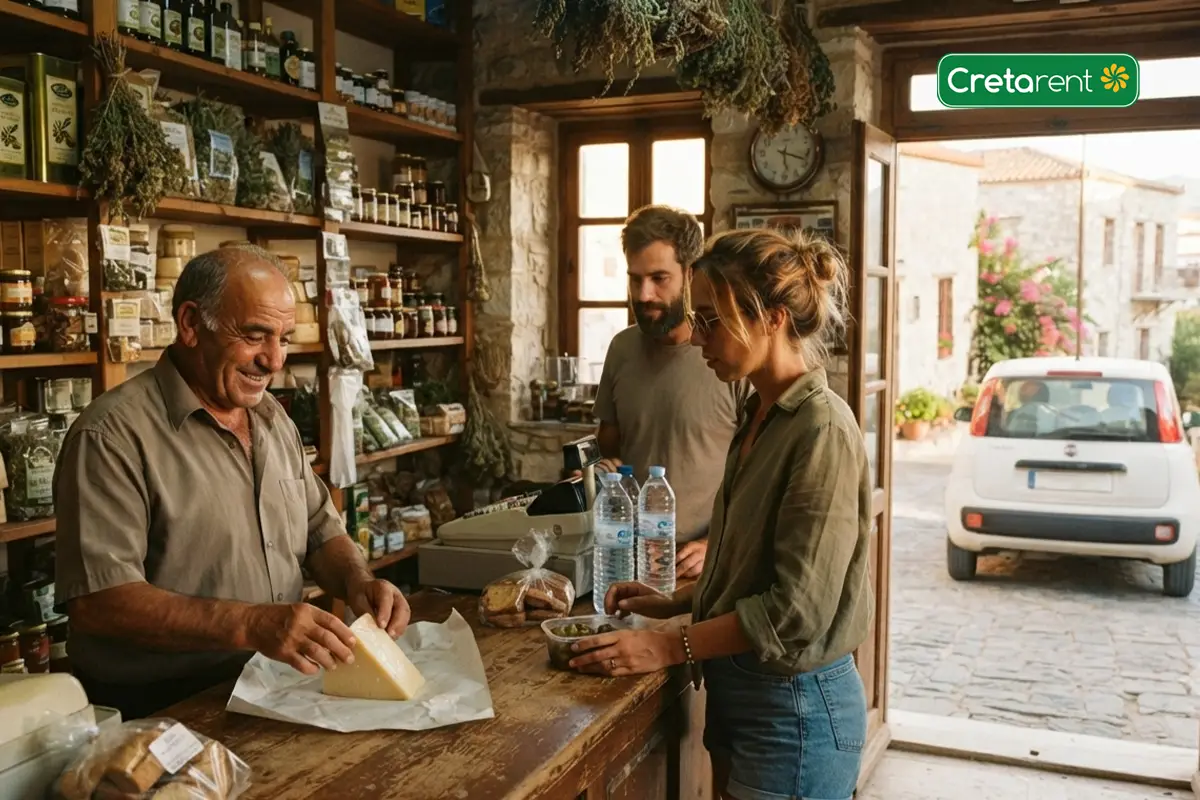
The first time you drive through a Cretan village, it is easy to concentrate on the road. The streets can be narrow, the bends unexpected and the signs not always as obvious as you might hope.
But once you get comfortable, start looking around.
A village is rarely just something you pass on the way to somewhere else. There are old houses, tiny workshops, cafés, olive presses, churches, courtyards and people going about their day. You don’t need to stop at every one of them. Just noticing them changes the way you see the drive.
Look at the Houses
The older houses are often the first thing worth noticing.
Look beyond the freshly painted holiday homes and you’ll find stone walls, wooden doors, arched entrances, small balconies and houses built directly into the slope. Traditional Cretan rural architecture has developed around the practical needs of village life, with features such as stone construction, courtyards, fireplaces and old wine presses appearing in traditional homes.
Some details are easy to miss from the main road. A doorway might have an old stone frame. A house might have a tiny balcony tucked above the street. Another may have been altered many times over the years, leaving several different periods visible on the same building.
You don’t need to know the architectural history to enjoy it. Just slow down enough to notice.
Find the Village Square
Most villages have somewhere that acts as their social centre, even if it is little more than a few tables under a tree.
Look for the plateia, usually close to the church or the village cafés. You might find a kafeneio, a couple of benches, a fountain, a large plane tree or simply a handful of tables spread onto the pavement. In some Cretan villages, the square can feel almost empty at one time of day and completely different a few hours later.
That’s part of the fun.
Traditional coffee houses remain an important part of village life, and in many places they are still where locals stop for coffee and conversation rather than somewhere designed specifically for visitors.
If you see a few locals sitting outside, you have probably found the right place to stop.
Watch for the Workshops
Don’t only look for things with a tourist sign outside. A small workshop with its door open can tell you more about a village than a souvenir shop. You might see someone repairing agricultural equipment, working with wood, fixing a vehicle or preparing something for the day’s work.
These places are easy to miss because they aren’t attractions. That’s precisely why they’re interesting. Crete’s villages have traditionally been closely connected to agriculture and local production, from olive oil and wine to household crops and other small-scale activities.
Sometimes you’ll see the evidence before you see the business itself: stacks of crates, an old tractor, tools outside a building or sacks waiting beside a doorway.
Look Down the Side Streets
The main road isn’t always the most interesting part of the village. If there is somewhere safe to park, leave the car and walk for ten minutes. A side street can suddenly lead to an old church, a tiny courtyard or a group of houses that you would never have noticed while driving.
Look for old stone lanes, arches and doorways. In some villages, the road itself follows the shape of the hillside, so buildings appear above and below you as you walk. You don’t need a map.
Pick a direction, wander for a little while and eventually you’ll find your way back to the main road.
Notice the Trees
A large plane tree can be a useful clue that you’re approaching somewhere people gather.
Trees provide shade for village squares, cafés and outdoor tables, and some villages are built around springs or running water. The combination of shade, water and a café is one of those small details that can completely change the atmosphere of a village in the warmer months. The villages of Apokoronas, for example, are known for their plane trees, springs and traditional cafés.
But don’t only look for plane trees. Olive trees, vines, citrus trees and small vegetable gardens often appear right alongside houses. In many parts of Crete, the countryside doesn’t stop when you reach the edge of the village. It blends into everyday life.
Look for the Church
You don’t have to visit every church you pass. But they are worth noticing. A small village church might have a simple stone exterior and almost no obvious decoration from the road. Another may sit in the middle of the village with houses built around it.
Sometimes you’ll spot a bell tower before you realise there is a church nearby. If the doors are open and you decide to go inside, remember that these are active places of worship. Dress appropriately and keep the visit quiet.
Pay Attention to What Is Parked Outside
This is one of our favourite ways of reading a village. Look at the vehicles.
A row of dusty pickups outside one building tells a different story from a line of rental cars outside a restaurant. A tractor parked beside a house, a tiny van loaded with boxes or an old scooter leaning against a wall can tell you what kind of work is happening nearby.
Even the parking can give you clues. A busy little taverna with mostly local cars outside is often worth remembering for another day. You don’t have to stop immediately. Make a mental note and keep driving.
Don’t Ignore the Countryside Between Villages
One of the best things about driving around Crete is that the landscape doesn’t suddenly become “countryside” once you leave the village.
Olive groves often come right up to houses. Vineyards appear between settlements. Small chapels sit beside roads, and old stone structures can appear in fields without any obvious explanation.
Traditional Cretan landscapes also contain less familiar structures, including old water and wind mills, aqueducts, cisterns and mitata — round dry-stone buildings traditionally associated with shepherds and cheese-making.
You won’t necessarily see these on every drive. That’s why it’s worth keeping your eyes open.
Know When to Stop
Of course, looking around shouldn’t mean becoming distracted while driving. If something catches your attention, find somewhere safe to pull over. If the village has a suitable parking area, leave the car and walk.
This is also where a rental car gives you an advantage over simply passing through on a bus. You can decide to stop for ten minutes, stay for an hour or turn around because you spotted something interesting on the way in.
The important thing is to stop safely and avoid blocking narrow village streets. Someone living there may need to get through in the opposite direction — and they probably aren’t interested in waiting while you take a photograph.
You Don’t Have to See Everything
There is a temptation when exploring Crete to turn every village into a destination. You don’t need to. Sometimes the best village is the one where you stop for coffee without having planned to. Sometimes you’ll notice an old house, a shady square or a tiny workshop and keep going.
The next time you drive through a Cretan village, try looking beyond the road itself. Notice the houses. Look for the café. Watch what is happening around the square. Notice the trees, the old doors, the parked tractors and the roads disappearing uphill.
You may not remember the name of the village afterwards. You’ll probably remember what you saw there.
Continue Exploring Crete